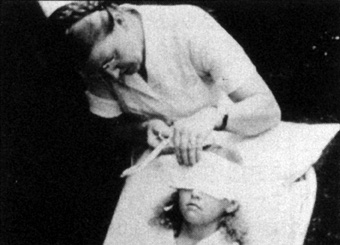
25 October 2008

London Film Festival 2008

LONDON FILM FESTIVAL: ARTISTS' FILM & VIDEO
London BFI Southbank
25-26 October 2008

The festival’s annual celebration of artists’ film and video will take place on 25-26 October 2008, presenting a diverse selection of international work in eight screenings that open a window onto a wide range of creativity.

This year’s selection includes special programmes devoted to the work of Nathaniel Dorsky, Alina Rudnitskaya, Ben Rivers and Michel Auder. Films by the radical French theorist Guy Debord will be shown in 35mm preservation prints. New approaches to documentary and ethnography recur throughout the weekend, which presents established and emerging artists in a curated survey of innovation in the moving image. Several makers will be present to discuss their work and two continuous installations will be shown in the BFI Southbank Studio.

Curated by Mark Webber for The Times BFI 52nd London Film Festival.

PLEASE NOTE: More tickets for "sold out" screenings will be released on Friday 10 October.

Pneuma Monoxyd (Thomas Köner, 2007)

Saturday 25 October 2008, from 12-7pm, Studio, FREE
PNEUMA MONOXYD

PNEUMA MONOXYD
Thomas Köner | Germany-Serbia 2007 | 10 min (continuous loop)
Merging surveillance images of a German shopping street and a Balkan marketplace, Köner’s darkly abstract work, with its spatially evocative soundtrack, generates a muted sense of spectral dystopia.

Four Toronto Films (Nicky Hamlyn, 2007)

Saturday 25 October 2008, at 2pm, NFT3
A SENSE OF PLACE

FOUR TORONTO FILMS
Nicky Hamlyn | UK 2007 | 18 min
During a residency in the Canadian city, Hamlyn made this suite of films that explore a direct relationship between subject matter and camera apparatus. Three scrutinise aspects of the urban locale, the other an accelerated view of Koshlong Lake.

21 ALLEYS
Robert Todd | USA 2007 | 9 min
A residential street, seen through the passageways that separate its dwellings, is the focus of this understated study of gentrification in a Boston neighbourhood.

LOSSLESS #2
Rebecca Baron, Douglas Goodwin | USA 2008 | 3 min
Witness the dematerialization of an avant-garde standard as incomplete digital files, downloaded from file sharing networks, induce trouble in the image.

TRILOGY: KETTLE’S YARD
Jayne Parker | UK 2008 | 25 min
Linear Construction, Woman with Arms Crossed and Arc refer back to a quartet of films made with musician Anton Lukoszevieze almost a decade ago. This new anthology for solo cello was shot at Kettles Yard and incorporates items from the museum’s collection which open up metaphorical space and meaning.

THE MIRACLE OF DON CRISTOBAL
Lawrence Jordan | USA 2008 | 12 min
An alchemical melodrama composed of engravings from 19th century adventure stories. The illustrations are conjured into motion as improbable sounds collide with a Puccini aria.

Total running time approximately 90 min


Sur le passage de quelques personnes à travers une assez courte unité de temps
(Guy Debord, 1959)

Saturday 25 October 2008, at 4pm, NFT3
GUY DEBORD

‘The cinema, too, has to be destroyed.’ (Guy Debord)

An extremely rare opportunity to see new 35mm prints of films by French writer and theorist Guy Debord, best known for The Society of the Spectacle. Debord was a central figure of the Situationist International (SI), a nihilistic band of agitators whose harsh critiques of capitalist society, inspired by Marxism and Dada, were conveyed through publications, visual art and collective actions. Articulated primarily in the French language, Situationism was relatively ineffective in Britain and America in its time, and though numerous translations are now available, Debord’s radical films remain unseen. Far ahead of its time, his technique of ‘détournement’ assimilates still and moving image-scraps from features, newsreels, printed matter, advertisements and other detritus to satisfy the viewer’s ‘pathetic need’ for cinematic illusion. Propelled by a spoken, monotonous discourse, the images do not so much illustrate the text as underpin it, often maintaining a metaphorical relationship that may not at first be apparent. The two films showing here effectively bookend Debord’s involvement with the Situationists, whose politically subversive practice aspired to provoke a revolution of everyday life.

SUR LE PASSAGE DE QUELQUES PERSONNES À TRAVERS UNE ASSEZ COURTE UNITÉ DE TEMPS
Guy Debord | France 1959 | 18 min
In the dingy bars of St-Germain-des-Prés, Debord and his associates formed a bohemian underground for whom ‘oblivion was their ruling passion.’ This anti-documentary captures the SI close to its moment of inception, following their separation from the Lettristes two years prior.

IN GIRUM IMUS NOCTE ET CONSUMIMUR IGNI
Guy Debord | France 1978 | 105 min
‘I will make no concessions to the public in this film. I believe there are several good reasons for this decision, and I am going to state them.’ And state them he does. Debord’s final film is a denunciation of cinema and society at large, an unremitting diatribe against consumption. The SI is equated to a military operation (charge of the light brigade, no less) as its members are presented alongside images of the D-Day landings, Andreas Baader, Zorro, a comic strip Prince Valliant and quotes from Shakespeare, Ecclesiastes and Omar Khayyám. Debord takes no prisoners in this testament to his anarchistic vision.

Total running time approximately 125 min


Bitch Academy (Alina Rudnitskaya, 2008)

Saturday 25 October 2008, at 7pm, NFT3
ALINA RUDNITSKAYA

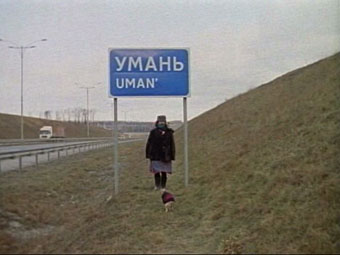
Alina Rudnitskaya’s humanistic approach to documentary filmmaking often brings out the humour in her chosen subjects. As an introduction to her work, this programme depicts three diverse groups of contemporary Russian women.

AMAZONS
Alina Rudnitskaya | Russia 2003 | 20 min
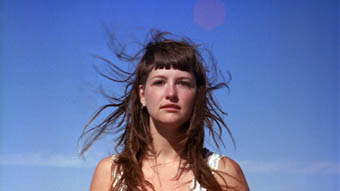
A sensitive portrait of an unusual urban phenomenon: a troupe of independent and strong-minded girls who keep horses in the heart of St Petersburg. Amazons follows a new volunteer as she tries to find her place within the group dynamic.

BESAME MUCHO
Alina Rudnitskaya | Russia 2006 | 27 min
With music providing an escape from their duties as veterinarians, nurses and cleaners, the amateur chorus of a provincial town rehearse songs from Verdi’s ‘Aida’. Close bonds are formed, but in true diva style, relationships within the choir are frequently inharmonious.

BITCH ACADEMY
Alina Rudnitskaya | Russia 2008 | 29 min
An improbable symbol of modern Russia is displayed in this tragicomic verité on the aspirations of young women. In a progressive twist on assertiveness training, a middle-aged, paunchy Casanova (who surely loves his job) gives classes on how to seduce the male using role play, styling critiques and sexy dancing. The ultimate goal is to hitch a millionaire, and though there’s much humour in the situation, occasional tears and telling looks remind us that the insecurities of real lives are being laid bare.

Total running time approximately 80 min


Horizontal Boundaries (Pat O’Neill, 2008)

Saturday 27 October 2008, at 9pm, NFT3
WHEN LATITUDES BECOME FORM

IN THE KINGDOM OF SHADOWS
Francisca Duran | Canada 2006 | 6 min
Set in metal type, a passage from Maxim Gorky’s review of the Lumières melts into a pool of molten lead.

HOW TO CONDUCT A LOVE AFFAIR
David Gatten | USA 2007 | 8 min
‘An unexpected letter leads to an unanticipated encounter and an extravagant gift. Some windows open easily; other shadows remain locked rooms.’ (David Gatten)

THE PARABLE OF THE TULIP PAINTER AND THE FLY
Charlotte Pryce | USA 2008 | 4 min
A saturated cine-miniature inspired by Dutch 17th Century painting.

DEEP SIX
Sami van Ingen | Finland 2007 | 7 min
The film image of a loaded truck, careening free of its position in the frame, speeds along a mountain road towards an inevitable fate.

DE TIJD
Bart Vegter | Netherlands 2008 | 9 min
Computer animated abstraction in three dimensions. Slowly evolving geometric forms suggest sculptural figures and waning shadows.

HORIZONTAL BOUNDARIES
Pat O’Neill | USA 2008 | 23 min
O’Neill’s dizzying deployment of the 35mm frame-line is intensified by Carl Stone’s electronic score. A hard and rhythmic work, thick with superimposition, contrary motion and volatile contrasts, reminiscent of his pioneering abstract work of prior decades.

EASTER MORNING
Bruce Conner | USA 2008 | 10 min
Bruce Conner’s freewheeling camera chases morning light in a hypnotic blur of colour and multiple exposures. This final work by the artist and filmmaker rejuvinates his rarely seen 8mm film Easter Morning Raga (1966). With music by Terry Riley.

Total running time approximately 70 min
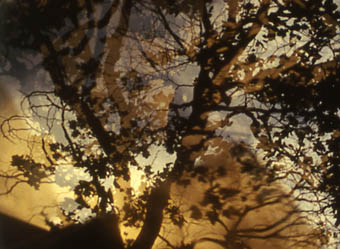

Kempinski (Neil Beloufa, 2007)

Sunday 28 October 2008, from 12-7pm, Studio, FREE
KEMPINSKI

KEMPINKSI
Neil Beloufa | Mali-France 2007 | 14 min (continuous loop)
Whilst challenging our stereotypical view of Africa, Kempinksi also blurs the lines between documentary, ethnography and science fiction. Asked to imagine the future but to speak in the present tense, the protagonists describe extraordinary and unexpected visions.


Sarabande (Nathaniel Dorsky, 2008)

Sunday 26 October 2008, at 2pm, NFT3
NATHANIEL DORSKY IN PERSON

In his search for a ‘polyvalent’ mode of filmmaking, Nathaniel Dorsky has developed a filmic language which is intrinsic and unique to the medium, and expressive of human emotion. Seeking wonder not only in nature but in the everyday interaction between people in the metropolitan environment, Dorsky observes the world around him. Free of narrative or theme, his films transcend daily reality and open a space for introspective thought. ‘Delicately shifting the weight and solidity of the images’, a deeper sense of being is manifest in the interplay between film grain and natural light. Dorsky returns to London to introduce two brand new films and Triste, the work that first intimated his sublime and distinctive ‘devotional cinema’. These lyric films are humble offerings which unassumingly blossom on the screen, illuminating a path for vision.

WINTER
Nathaniel Dorsky | USA 2007 | 19 min
‘San Francisco’s winter is a season unto itself. Fleeting, rain-soaked, verdant, a brief period of shadows and renewal.’ (Nathaniel Dorsky)

SARABANDE
Nathaniel Dorsky | USA 2008 | 15 min
‘Dark and stately is the warm, graceful tenderness of the sarabande.’ (Nathaniel Dorsky)

TRISTE
Nathaniel Dorsky | USA 1978-96 | 19 min
Triste is an indication of the level of cinema language that I have been working towards. By delicately shifting the weight and solidity of the images, and bringing together subject matter not ordinarily associated, a deeper sense of impermanence and mystery can open. The images are as much pure-energy objects as representation of verbal understanding and the screen itself is transformed into a ‘speaking’ character. The ‘sadness’ referred to in the title is more the struggle of the film itself to become a film as such, rather than some pervasive mood.’ (Nathaniel Dorsky)

Total running time approximately 70 min
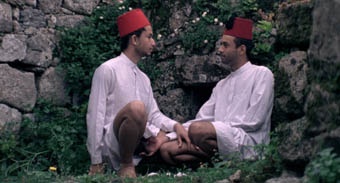

The Feature (Michel Auder & Andrew Neel, 2008)

Sunday 26 October 2008, at 3:45pm, NFT3
Tuesday 28 October 2008, at 7pm, Studio
THE FEATURE

THE FEATURE
Michel Auder, Andrew Neel | USA 2008 | 177 min

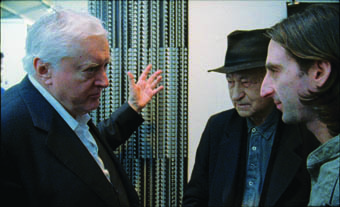
In Michel Auder’s case, the truth is certainly stranger than fiction. One of the first to compulsively exploit the diaristic potential of the Sony Portapak, he was right there at the heart of the Warhol Factory and the Soho art explosion. This fictionalised biography draws on his vast archive of videotapes, connecting them by means of a distanced narration and new footage, shot by co-director Andrew Neel, in which Auder portrays his doppelganger, an arrogantly successful artist who may or may not have a life-threatening condition. Resisting nostalgia through wilful ambiguity, The Feature remains raw and brutally honest as Auder displays the best and worst of himself. Taking in his marriages to both Viva and Cindy Sherman, and affiliations with Larry Rivers, the Zanzibar group and the downtown art scene, this is necessarily a tale of epic proportions, chronicling an amazing journey through art and life whilst providing access to a wealth of fascinating personal footage.


Tjúba Tén (Brigid McCaffrey & Ben Russell, 2008)

Sunday 26 October 2008, at 7pm, NFT3
THE WORD FOR WORLD IS FOREST

SMALL MIRACLES
Julia Hechtman | USA 2006 | 5 min
Sci-fi hallucinations seem commonplace as Hechtman invokes mysterious natural phenomena: an extreme case of mind over matter.

KEMPINSKI
Neil Beloufa | Mali-France 2007 | 14 min
Speaking in the present tense, interviewees describe their idiosyncratic notions of the future. To the western viewer, the unlikely subjects, stylized settings and atmospheric lighting impart a strange disconnect between science fiction and anthropology.

TJÚBA TÉN (THE WET SEASON)
Brigid McCaffrey, Ben Russell | USA-Suriname 2008 | 47 min
‘An experimental ethnography composed of community-generated performances, re-enactments and extemporaneous recordings, this film functions doubly as an examination of a rapidly changing material culture in the present and as a historical document for the future. Whether the record is directed towards its subjects, its temporary residents (filmmakers), or its Western viewers is a question proposed via the combination of long takes, materialist approaches, selective subtitling, and a focus on various forms of cultural labour.’ (Ben Russell)

REMOTE INTIMACY
Sylvia Schedelbauer | Germany 2008 | 15 min
Cast adrift in the collective unconscious, Remote Imtimacy constructs an allegorical collage from found footage and biographical fragments, exploring cultural dislocation using the rhetoric of dreams.


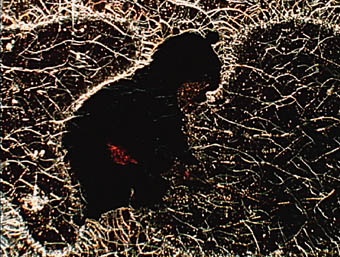
Origin of the Species (Ben Rivers, 2008)

Sunday 26 October 2008, at 9pm, NFT3
BEN RIVERS AT THE EDGE OF THE WORLD

An intrepid explorer, Ben Rivers toys with ethnographic tropes whilst roaming free from documentary truth. Encountering those who choose to live apart from society, his nonjudgmental approach presents ‘real life, or something close to it.’ The Edge of the World features several recent works with other films of his choice.

AH LIBERTY!
Ben Rivers | UK 2008 | 19 min
In the wilderness of a highland farm, a bunch of tearaways joyride, smash up, tinker and terrorize the way that only children can. Assimilating landscape and livestock, this poetic study contrasts the languid setting with the youngster’s restless energy.

RECORDANDO EL AYER
Alexandra Cuesta | USA 2007 | 9 min
Utilitarian objects, related to health and hygiene, rendered in unconventional ways. This unsettling film questions the way that we relate to our surroundings by exploring the ‘radical otherness’ of things.

ASTIKA
Ben Rivers | UK-Denmark 2007 | 8 min
Danish recluse Astika has allowed nature to run wild, overgrowing his own habitat to the point that he has no option but to move away. The film is a hazy arrangement in green and gold, all rich textures and lush foliage.

SINGING BISCUITS
Luther Price | USA 2007 | 4 min
A gospel cry rings out across the decades, disrupted in space and time, fading but resilient.

NEW SURPRISE FILM
Ben Rivers | UK 2008 | c.7 min
A little anticipation never did anyone any harm; you’ll have to be there to find out what it is.

ORIGIN OF THE SPECIES
Ben Rivers | UK 2008 | 17 min
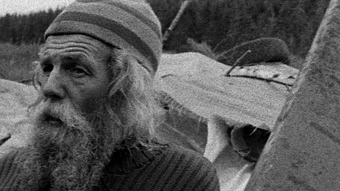
‘A 70-year old man living in a remote part of Scotland has been obsessed with ‘trying to really understand’ Darwin’s book for many years. Alongside this passion, he’s been constantly working on small inventions for making his life easier. The film investigates someone profoundly interested in human beings, but who has decided to live separately from the majority of them.’ (Ben Rivers)

Total running time approximately 75 min


Advance booking recommended
Standard ticket price is £8.50

Book online at www.bfi.org.uk/lff
Telephone Box Office: 020 7928 3232
Book in person at BFI Southbank

For full booking info see www.bfi.org.uk/lff
Labels: , ,

17 October 2008

Jonas Mekas presents FLUX PARTY

JONAS MEKAS PRESENTS FLUX PARTY
London Rio Cinema
Friday 17 October 2008, from 11:15pm 'til late

Legendary artist-filmmaker Jonas Mekas presents FLUX PARTY featuring the complete FLUXUS film anthology as assembled by George Maciunas, rare Fluxus audio and surprises.

Fluxus Anthology title by George Maciunas

Includes films by Yoko Ono, Nam June Paik, Wolf Vostell, George Brecht, Dick Higgins, Robert Watts, John Cale, Chieko Shiomi, Paul Sharits and Ben Vautier. A special late night screening on the big screen of East London's splendid art deco picture palace.

Jonas Mekas will be in attendance to discuss Fluxus and his friend and fellow Lithuanian émigré George Maciunas. Drinks and Flux Cakes will be served.

Curated by Anne-Sophie Dinant and Mark Webber. Presented by the South London Gallery. With thanks to Benn Northover, Serpentine Gallery, Re:Voir and the Rio Cinema. Supported by the Lithuanian Ministry of Culture and Freedom Brewery.

Fluxfilm No. 16: Four (Yoko Ono, 1967)

Friday 17 October 2008, from 11:15pm 'til late
JONAS MEKAS PRESENTS FLUX PARTY

FLUXFILM ANTHOLOGY

The most complete known version of the Fluxfilm Anthology.

Fluxfilm No. 1: Zen For Film, Nam June Paik, 1964, 20 min.
“Clear film, accumulating in time dust and scratches.”

Fluxfilm No. 2: Invocation of Canyons and Boulders, Dick Higgins, 1966, 3 min version.
“Mouth, eating motions.”

Fluxfilm No. 3: End After 9, George Maciunas, 1966, 1 min.
“Word & number gag, no camera.”

Fluxfilm No. 4: Disappearing Music For Face, Chieko Shiomi, 1966, 10 min.
“Transition from smile to no-smile, shot at 2000fr/sec. Camera shows only a CU of the mouth area.” Camera: Peter Moore

Fluxfilm No. 5: Blink, John Cavanaugh, 1966, 5 min.
“Flicker: White and black alternating frames.”

Fluxfilm No. 6: 9 Minutes, James Riddle, 1966, 9 min.
“Time counter, in seconds and minutes.”

Fluxfilm No. 7: 10 Feet, George Maciunas, 1966, 13 sec.
“Prestype on clear film measuring tape, 10ft. length. No camera. At the end of every foot of film numbers appear, 1, 2, etc to 10.”

Fluxfilm No. 8: 1000 Frames, George Maciunas, c.1966, 42 sec.
“Numerals on clear film from 1 to 1000.”

Fluxfilm No. 9: Eyeblink, Yoko Ono, 1966, 1 min.
“High speed camera, 200fr./sec. view of one eyeblink.” Camera: Peter Moore

Fluxfilm No. 10: ENTRANCE to EXIT, George Brecht, 1966, 7 min.
“A smooth linear transition from white, through greys to black, produced in developing tank. The ‘door sign’ ENTRANCE fades in, white letters on the black background, stays for a few seconds, then slowly fades into white. Five-minute fade into black and the title EXIT, which stays for a few seconds then fades into white.”

Fluxfilm No. 22: Shout (Jeff Perkins, 1966)

Fluxfilm No. 11: Trace No. 22, Robert Watts, 1965, 1 min.
“X-ray sequence of mouth and throat; eating, salivating, speaking.”

Fluxfilm No. 12: Trace No. 23, Robert Watts, 1966, 3 min.
“Begins with a shot of a demarcation line on an asphalt tennis court. A hand points to the distant landscape, then numbers 408 and 409 appear on a female torso. The female then passes different decorated plastic hot dogs, banana shapes suggestively between her legs, through her arm pits, etc. Ends with an egg floating on water.”

Fluxfilm No. 13: Trace No. 24, Robert Watts, 1966, 3 min.
“Begins with a picture of Marilyn Monroe, then shifts to a female body, shot from belly button down, which is wriggling under piles of cellophane.”

Fluxfilm No. 14: One, Yoko Ono, 1966, 5 min.
“High speed camera 2000fr/sec. match striking fire.” Camera: Peter Moore.

Fluxfilm No. 15: Eye Blink, Yoko Ono, 1966, 1 min.
“Same as No. 9, probably.” Camera: Peter Moore.

Fluxfilm No. 16: Four, Yoko Ono, 1967, 6 min.
“Sequences of buttock movement as various performers walked. Filmed at constant distance.” With Susanna Campbell, Philip Corner, Anthony Cox, Bici Hendricks, Geoffrey Hendricks, Kyoko Ono, Yoko Ono, Ben Patterson, Jeff Perkins, Susan Polang, Jerry Sablo, Carolee Schneemann, James Tenney, Pieter Vanderbiek, Verne Williams. Camera: Jeff Perkins, Anthony Cox.

Fluxfilm No. 17: 5 O’Clock in the Morning, Pieter Vanderbiek, 1966, 5 min.
“A handful of rocks and chestnuts falling, filmed with high speed camera.” Camera: Peter Moore.

Fluxfilm No. 18: Smoking, Joe Jones, 1966, 6 min.
“Sequence of cigarette smoke shot with high speed camera, 2000fr/sec.” Camera: Peter Moore.

Fluxfilm No.19: Opus 74, version 2, Eric Andersen, 1966, 1 min.
“Single frame exposures, color. Different image each frame, various items in the room, etc.”

Fluxfilm No. 20: ARTYPE, George Maciunas, 1966, 4 min.
“Artype patterns, intended for loops.” Benday dot patterns. Dots, lines. “Screens, wavy lines, parallel lines, etc. on clear film. No camera.”

Fluxfilm No. 22: Shout, Jeff Perkins, 1966, 3 min.
“Close-ups of two faces, shouting at each other.” Starring Jeff Perkins and Anthony Cox. Camera: Yoko Ono.

Fluxfilm No. 23: Sun in Your Head, Wolf Vostell, 1963, 6 min.
“Single Frame sequences of TV or film images, with periodic distortions of the image. The images are airplanes, women men interspersed with pictures of texts like: ‘silence, genius at work’ and ‘ich liebe dich.’ The end credit is ‘Television décollage, Cologne, 1963’.” Camera: Edo Jansen.

Fluxfilm No. 24: Readymade, Albert Fine, 1966, 45 sec.
“Color test strip from developing tank.”

Fluxfilm No. 25: The Evil Faerie, George Landow, 1966, 30 sec.
“A man on the roof making flying gestures with his hands. Film is preceded by a picture of an object of ‘L’ shape shakingly moving. At the end of the film, image of ‘Kodak girl’ briefly appears.” With Steven M. Zinc.

Fluxfilm No. 26: Sears Catalogue 1-3 (Paul Sharits, 1965)

Fluxfilm No. 26: Sears Catalogue 1-3, Paul Sharits, 1965, 28 sec.
“Pages from Sears catalogue, single frame exp.”

Fluxfilm No. 27: Dots 1 & 2, Paul Sharits, 1965, 46 sec.
“Single frame exposures of dot-screens.”

Fluxfilm No. 28: Wrist Trick, Paul Sharits, 1965, 28 sec.
“Various gestures of hand held razorblade, single frame exposures.”

Fluxfilm No Number: Unrolling Event, Paul Sharits, 1965, 5 sec.
“Toilet paper event, single frame exposures.”

Fluxfilm No. 29: Word Movie, Paul Sharits, 1965, 4 min.
“Single frame exposures of words, color.”

Fluxfilm No. 30: Dance, Albert Fine, 1966, 2 min.
“Face Smiling. Hammering a brick. CU of an ear (moving?). Face twitching. Dancing on one leg. Rolls, twitches on the floor. Boxes the wall.”

Fluxfilm No. 31: Police Car, John Cale, 1966, 1 min.
“Underexposed sequence of blinking lights on a police car.”

Fluxfilm No. 36: Fluxfilm No. 36, Peter Kennedy & Mike Parr, 1970, 3 min.
“Tips of feet walking at the edge of frame, all around the frame.”

Fluxfilm No. 37: Fluxfilm No. 37, Peter Kennedy & Mike Parr, 1970, 2 min.
“Face going out of focus by layering sheets of plastic between camera and subject.”

Fluxfilm No. 38: Jen e vois rien Je n’entends rien Jen e dis rien, Ben Vautier, 1965, 5 min.
“Seeing, Hearing, Saying Nothing. Ben stands with ears, eyes, mouth bandaged.”

Fluxfilm No. 39: La traverse du port de Nice á la nage, Ben Vautier, 1963, 2 min
“Swimming across Nice harbour fully clothed. Ben swims across a bay in Nice.”

Fluxfilm No. 40: Fair un effort, Ben Vautier, 1969, 2 min.
“Lifting and holding up a chest of drawers.”

Fluxfilm No. 41: Regardez moi cela suffit, Ben Vautier. 1962, 3 min.
“Sitting on a promenade in nice with a sign: Watch me, that’s all.”


at

Rio Cinema
107 Kingsland High Street, Dalston, London, E8 2PB
MAP OF AREA

Nearest Train: Dalston Kingsland (London Overground)
Buses: 30, 38, 75, 149, 242, 243
Night Buses: N38, N149, N242, N243

Tickets: £6 (drinks included), booking recommended
Box Office: 020 7241 9410
www.riocinema.org.uk

www.southlondongallery.org

Labels: , ,

07 October 2008

Star Spangled To Death

STAR SPANGLED TO DEATH
London Chisenhale Gallery
Sunday 2 November 2008, from 2pm to 10pm

A FREE screening of Star Spangled To Death, Ken Jacobs’ episodic indictment of American politics, religion, war, racism and stupidity, timed to coincide with the US election and the end of the Bush regime. Starring Jack Smith, Richard Nixon, Nelson Rockefeller, Minnie Mouse, Al Jolson and a cast of thousands.

Star Spangled To Death (Ken Jacobs, 1957-59/2004)

STAR SPANGLED TO DEATH
Ken Jacobs, USA, 1957-59/2004, 400 minutes (plus intermissions)

Jacobs' extraordinary epic combines whole found films, documentaries, newsreels, musicals and cartoons with improvised performances by the legendary Jack Smith and Jerry Sims. Together they picture a dangerously sold-out America where racial and religious prejudice, the monopolisation of wealth and an addiction to war are opposed by Beat generation irreverence.

STAR SPANGLED TO DEATH will be shown with several intermissions. Some refreshments available, or bring a packed lunch and a cushion!

Star Spangled To Death (Ken Jacobs, 1957-59/2004)

Presented by Whitechapel at Chisenhale, in collaboration with Mark Webber and tank.tv. A portfolio of 20 works by Ken Jacobs are currently online at tank.tv.

at

Chisenhale
64 Chisenhale Rd, London, E3 5QZ
MAP OF AREA

Nearest Tube: Mile End / Bethnal Green
Buses: 8, 277, 425, 339, D6

FREE ADMISSION
Telephone: 020 8981 4518

www.chisenhale.org.uk
www.whitechapel.org

01 October 2008

Ken Jacobs at tank.tv

KEN JACOBS
Online at www.tank.tv
1 October - 30 November 2008

Ken Jacobs has been active as a filmmaker, performer and teacher for the past five decades. Rigorous and dedicated, his work is characterised by a keen eye for formal composition and a fierce political consciousness.

The exhibition at tank.tv presents a portfolio of 20 works covering 50 years of Ken Jacobs’ artistic production from 1957 to the present day.

Razzle Dazzle: The Lost World (Ken Jacobs, 2006)
As a central figure of the generation that defined independent filmmaking during the post-War era, Ken Jacobs contributed to the liberation of cinema from technical and ideological conventions. Beginning in the 1950s, he developed an ‘urban guerrilla cinema’ out of poverty and desperation, shooting improvised routines on city streets. The early works Star Spangled to Death, Little Stabs at Happiness and Blonde Cobra feature a nascent Jack Smith, years before the renegade artist produced his own films.

Having lived in New York all his life, the changing character of the city has been a strong presence throughout Jacobs’ work, from his manipulation of vintage street scenes in New York Ghetto Fishmarket 1903, through to the diaristic video Circling Zero: We See Absence, which observes the aftermath of the attack on the World Trade Center, a few blocks away from Jacobs’ home. The Sky Socialist was shot in a deserted neighbourhood (long since decommissioned) below the Brooklyn Bridge in the 1960s, and Perfect Film uses raw television news reports on the assassination of Malcolm X.

Star Spangled To Death (Ken Jacobs, 1957-59/2004)
Found or archival footage is a source for much of Jacobs’ work. In Star Spangled to Death, entire appropriated films contribute to an accumulative denunciation of American politics, religion, war and racism, whereas an analytical approach to reclaiming cinema’s past was originated in Tom, Tom the Pipers’ Son by re-filming selected details of a theatrical production dating from 1905. This same footage has lately been digitally excavated in Return to the Scene of the Crime.

The technique of unlocking aspects of film material that would otherwise pass unnoticed is the essence of the live Nervous System pieces that Jacobs has performed with two adapted projectors since the mid-1970s. Repetition and pulsing flicker teases frozen images into impossible depth and perpetual motion (demonstrated in New York Street Trolleys 1900), a process further developed by the Eternalism system of editing used in many recent videos. The previously ephemeral live performances Ontic Antics Starring Laurel and Hardy; By Molly! and Two Wrenching Departures are amongst the works that take on new life in their digital form.

Two Wrenching Departures (Ken Jacobs, 2006)
A contemporary of Stan Brakhage, Bruce Conner and Jonas Mekas, Ken Jacobs is one of the true innovators of the moving image, who continues his radical practice in the present. Though his images frequently depict bygone eras, the works are resolutely contemporary, displaying a vitality and ingenuity that is rarely matched.

Programme :-
The Whirled (1956-63), Star Spangled To Death (1957-59/2004), Little Stabs At Happiness (1958-63), Blonde Cobra (1959-63), The Sky Socialist (1964-65), Tom, Tom, The Piper's Son (1969-71), The Doctor's Dream (1978), Perfect Film (1985), Flo Rounds A Corner (1999), New York Street Trolleys 1900 (1999), Circling Zero: We See Absence (2002), Krypton Is Doomed (2005), Let There Be Whistleblowers (2005), Ontic Antics Starring Laurel And Hardy; Bye, Molly! (2005), The Surging Sea Of Humanity (2006), Capitalism: Child Labor (2006), New York Ghetto Fishmarket 1903 (2006), Two Wrenching Departures (2006), Razzle Dazzle: The Lost World (2006), Return To The Scene Of The Crime (2008)

Curated by Mark Webber.

After 30 November 2008, the exhibition will continue to be available in the tank.tv archive.

Ontic Antics with Laurel and Hardy; Bye, Molly! (Ken Jacobs, 2005)
ASK KEN

For the duration of the online show, tank.tv offers a unique opportunity for discussion with Ken Jacobs in an extended Q+A session. Email your questions to the artist at ken@tank.tv A regularly updated transcript of the dialogue will be online at www.tank.tv/askken

EVENTS

Friday 19 September 2008, at 7pm, Tate Modern, London
Return to the Scene of Crime (2008, 92 min)
An antique film print is probed, exploded and reconstituted in the digital domain with radical ingenuity and infectious wit. Screening as part of a weekend of tank.tv events at Tate.

Thursday 16 October 2008, at 9pm, BFI Southbank, London
& Sunday 19 October 2008, at 5pm, ICA Cinema, London

Momma’s Man (2008, 94 min). A feature film by Azazel Jacobs, starring and shot in the loft of his parents, Ken and Flo Jacobs. www.mommasman.com Screening in The Times BFI 52nd London Film Festival.

October/November, CAS Zuidas, Amsterdam
Capitalism: Child Labor (2006, 14 min), an animated deconstruction of a Victorian stereo photograph, will be regularly presented on the CASZ Contemporary Art Screen Zuidas on the Zuidplein in Amsterdam.

Sunday 2 November 2008, from 2pm-10pm, Chisenhale Gallery, London
Star Spangled to Death (1957-59/2004, 375 min). Celebrate the end of the Bush regime with a free screening of Ken Jacobs' episodic indictment of American politics, religion, war, racism and stupidity. Starring Jack Smith, Richard Nixon, Nelson Rockefeller, Al Jolson and a cast of thousands. Refreshments available. Presented by Whitechapel at the Chisenhale.

Saturday 29 November 2008, at 10:15pm, BFI IMAX, London
Ken Jacobs Nervous Magic Lantern live performance in collaboration with Eric La Casa, using pre-cinematic techniques to conjure abstract 3D forms on the immense IMAX screen. Part of the Kill Your Timid Notion tour (also performing in Bristol and Liverpool).

Sunday 30 November 2008, at 12:30pm, BFI Southbank, London
Ken Jacobs in Conversation. Kill Your Timid Notion presents a discussion with the artist to follow on from the previous night’s performance.

Tank Magazine, 10th Anniversary Issue (on sale now)
Ken Jacobs discusses Star Spangled to Death with Mark Webber, and contributes “Failed State” an article on contemporary American politics.

www.tank.tv

Labels: ,

19 September 2008

Return To The Scene Of The Crime

RETURN TO THE SCENE OF THE CRIME
London Tate Modern
19 September 2008

"The heartwarming story of a boy who didn’t know it’s wrong to steal. Running off with the pig seemed like a good idea at the time."

Return to the Scene of the Crime (Ken Jacobs, 2008)

Friday 19 September 2008, at 7pm
RETURN TO THE SCENE OF THE CRIME

In a contemporary riff on one of his landmark works, Ken Jacobs uses new technology to both interrogate and arouse a theatrical tableau, shot in 1905, based on Hogarth’s Southwark Fair. The antique film print is probed, exploded and reconstituted in the digital domain with radical ingenuity and infectious wit. This extraordinary new work teaches us how to see.

Ken Jacobs, Return to the Scene of the Crime, 2008, 92 min

Please Note: This work uses flickering imagery and is not suitable for those susceptible to photo-sensitive epilepsy.

Drinks and cakes will be served after the screening.
For full details of the tank.tv weekend at Tate Modern see Tank at Tate.

An online exhibition at www.tank.tv from 1 October to 30 November 2008 will feature a selection of 20 complete or excerpted works by Ken Jacobs, dating from 1956 to the present. Curated by Mark Webber for tank.tv and Tate Modern.


at

Starr Auditorium
Tate Modern, Bankside, London, SE1 9TG
Nearest Tube: Southwark / London Bridge / Blackfriars
MAP OF AREA

Tickets: £5 / £4 concessions, booking recommended
Box Office: 020 7887 8888
www.tate.org.uk

Labels: , ,

27 June 2008

Temenos 2008

TEMENOS 2008
Lyssaraia, Arcadia, Greece
27-29 June 2008

The premiere of Orders III, IV and V of Gregory J. Markopoulos' final and culminating film, ENIAIOS, will take place at the Temenos site, near Lyssaraia in Arcadia on 27-29 June 2008.

Temenos 2004

Orders I and II of ENIAIOS were unveiled at the same site in 2004 to an awed and enthusiastic audience who traveled from Europe and North America especially for the event. Gregory J. Markopoulos (1928–1992) was one of the few filmmakers to form every aspect of his films from production through to presentation. His concept of the Temenos grew out of a need to create a viewing space uniquely in harmony with the film image as a philosophical and psychological revelation. It also grew out of the wish to create a deeply personal and rewarding cinematic experience for the spectators of ENIAIOS, his final 80 hour film.

Markopoulos was convinced that his choice of the remote location near Lyssaraia is an essential element in preparing for the viewing of ENIAIOS. The spectators’ journey, whether from Athens or from abroad, to Loutra and the Temenos site, focuses his or her anticipation of the more extraordinary journey that takes place in front of the projected image over the three evenings. The serene pace of ENIAIOS allows for a gradual development to carry the viewer to a distinct perception of his or her own emotions in dialogue with the filmmaker’s concentrated, fleeting images. The projection event creates what Markopoulos called "the intuition space."

Temenos site in the 1980s

In addition to the journey, the natural beauty of the actual site is integral to the experience. Beginning with the setting of the sun, each screening is seen for three hours, from circa 10pm till 1am under the movements of the heavens. It is an offering. Therefore, the Temenos screenings are presented without charging admission. Each of the Orders is an autonomous part of ENIAIOS: it is not necessary to have seen Orders I and II in 2004 to appreciate the power of III, IV and V this year.

A small buffet will be served in the main square of Lyssaraia on June 26th, the evening before the first screening.

Lodgings must be confirmed in advance (by May 10th) either for the limited number of hotel rooms in the area or for the campsite near the screening area. Requests for reservations should be made by email to mail@the-temenos.org. You will be answered with a definitive offer for lodgings and other details.

The premiere of ENIAIOS III-V is dedicated to Markopoulos' vision. The three evenings at the Temenos site provide a unique opportunity to view his work in a pristine atmosphere and with a freedom of seeing.

Markopoulos and Beavers, 1980s

Follow these links to reports on the Temenos 2004 screenings :-
Artforum
Film Comment
Athens News

For further information visit the Temenos website. To receive email updates on Temenos 2008, subscribe to the Temenos Google Group.

Labels: ,

13 June 2008

Tony Conrad

TONY CONRAD
London Tate Modern
13-15 June 2008

Tony Conrad is a pivotal figure in contemporary culture. His multi-faceted contributions since the 1960s have influenced and redefined music, filmmaking, minimalism, performance, video and conceptual art.

2004 performance of Ten Years Alive on the Infinite Plain (1972)
Known for his groundbreaking film The Flicker, his involvement in the Theatre of Eternal Music and the evolution of the Velvet Underground, and collaborations with a host of luminaries including Jack Smith, John Cale, Mike Kelley and Henry Flynt, Conrad is a radical artist who challenges our understanding of art history.

This special weekend event at Tate Modern will feature a major new performance for the Turbine Hall and screenings of his extraordinary film and video work.

Tony Conrad curated by Stuart Comer, Alice Koegel and Mark Webber.

The Flicker (Tony Conrad, 1966)

Friday 13 June 2008, at 7pm
FLICKER AND PROCESS FILMS

Minimal cinema with maximal effect. Few films provide the intense, stroboscopic viewing experience of The Flicker, a non-objective film composed only of opaque and clear frames, and a pulsing electronic soundtrack. Conrad’s cinematic debut still astounds audiences four decades after its creation, and will be screened together with other works exploring audio-visual harmonics and the radical production processes of cooked and electrocuted films.

Tony Conrad, The Flicker, 1966, 30 min
Tony Conrad, Curried 7302, 1973, 2 min
Tony Conrad, 7302 Creole, 1973, 1 min
Tony Conrad, 4-X Attack, 1973, 2 min
Tony Conrad, Film Feedback, 1974, 14 min
Tony Conrad, The Eye of Count Flickerstein, 1967/75, 7 min
Tony Conrad, Articulation of Boolean Algebra for Film Opticals, 1975, 10 min excerpt
Beverly & Tony Conrad, Straight and Narrow, 1970, 10 min

The screening, introduced by Tony Conrad, will be followed by a drinks reception to celebrate the publication of Beyond the Dream Syndicate: Tony Conrad and the Arts after Cage by Branden W. Joseph (Zone Books/MIT).

In Line (Tony Conrad, 1986)

Saturday 14 June 2008, at 7pm
TONY TAKES ON VIDEO: WHO'S WATCHING WHO?

Tony Conrad investigates the conditions of video production and presentation in a series of tapes which deconstruct or re-appropriate the techniques of TV. Exploiting the reflexive nature of the medium, he critiques the electronic image and notions of history, theory and authority with an irreverent sense of humour. Postmodernism was never this much fun!

Tony Conrad, Concord Ultimatum, 1977, 10 min excerpt
Tony Conrad, Redressing Down, 1988, 18 min
Tony Conrad, Ipso Facto, 1985, 7 min
Tony Conrad, Lookers, 1984, 4 min excerpt
Tony Conrad, Egypt 2025, 1986, 13 min
Tony Conrad, No Europe, 1990, 13 min
Tony Conrad, Accordion, 1981, 5 min
Tony Conrad, In Line, 1986, 7 min

The artist will introduce this programme of rarely seen works.

Tony Conrad, 2003 performance at De Stijl / Freedom From Festival

Saturday 14 June 2008, at 10pm
UNPROJECTABLE: PROJECTION AND PERSPECTIVE

UNPROJECTABLE: PROJECTION AND PERSPECTIVE, a major new live performance by Tony Conrad, is specially conceived for the latent sound and immense scale of the Turbine Hall. Emerging from an installation inspired by the hum of the former power station’s one remaining generator, Conrad’s sonic and visual feast will incorporate an amplified string quartet, electric drill and motors, phonograph arms, film projection and shadows which loom high above the audience.

This is a FREE event as part of UBS Openings: Saturday Live.

Please Note: This event is FREE but advance booking is recommended by telephone 020 7887 8888, email ticketing@tate.org.uk or online.

DreaMinimalist (Marie Losier, 2008)

Sunday 15 June 2008, at 3pm
TONY CONRAD IN CONVERSATION + DREAMINIMALIST

Tony Conrad will discuss his radical breakthroughs in film, video, music and performance with Branden W Joseph, Associate Professor of Modern and Contemporary Art at Columbia University, and author of Beyond the Dream Syndicate: Tony Conrad and the Arts after Cage (Zone Books/MIT).

The discussion will include a screening of DreamMinimalist (Marie Losier, 2008, 25 min), the latest in Marie Losier's ongoing series of film portraits of avant-garde directors (Mike and George Kuchar, Guy Maddin, Richard Foreman). The film offers an insightful and hilarious encounter with Conrad as he sings, dances and remembers his youth and his association with Jack Smith.


at

Tate Modern
Bankside, London, SE1 9TG
Nearest Tube: Southwark / London Bridge / Blackfriars
MAP OF AREA

Screenings & Discussion Tickets: £5 / £4 concessions
Performance Tickets: FREE, booking recommended (see above)
Box Office: 020 7887 8888
www.tate.org.uk

Labels: , ,

07 March 2008

Gregory J. Markopoulos

GREGORY J. MARKOPOULOS
London Tate Modern
7 & 8 March 2008

Gregory J. Markopoulos (1928–1992) was a key figure in the evolution of the New American Cinema of the 1960s, an archetypal personal filmmaker who counted Jack Smith, Kenneth Anger, Stan Brakhage and Maya Deren amongst his contemporaries. His ravishing films are a complex combination of masterful camerawork and editing with a strong vision rooted in myth and poetry.

After relocating from New York to Europe in 1967, he planned the construction of an archive and projection space in Greece – The Temenos – a setting that would be in harmony with his extraordinary films. This pair of Tate Modern screenings anticipates the Temenos 2008 open air premieres of Markopoulos’ ENIAIOS III-V to be held in Lyssaraia on 27-29 June 2008, presented by the filmmaker Robert Beavers.


Gregory J. Markopoulos directs Jack Smith

Friday 7 March 2008, at 7pm
MARKOPOULOS: PORTRAITS OF ARTISTS

Markopoulos made many extraordinary film portraits, which often incorporate an activity or object that has personal significance to the subject. This programme presents a selection of poetic and sensuous portraits of cultural and art world luminaries such as Gilbert & George, Alberto Moravia, Giorgio de Chirico and Rudolph Nureyev.

“The films preserve the myriad flights of isolated, spectrally splintered and itinerant spirit, lost in yearning, in search of intuitive wholeness while negotiating mazes of desire, seeking sanctuary in the reflection of countless identities. The works hold a shimmering mirror up to the contradictory compulsions of an era, set to register, for a few instants, shocks of recognition.” (Kirk Winslow, Millennium Film Journal)

Gregory Markopoulos, Through a Lens Brightly: Mark Turbyfill, 1967, 12 min (Mark Turbyfill)
Gregory Markopoulos, ENIAIOS (Order III, Reel 1) (Gibraltar), undated, 15 min
(Gilbert & George)

Gregory Markopoulos, ENIAIOS (Order IV, Reel 6) (The Olympian), 1969, 23 min (Alberto Moravia)
Gregory Markopoulos, Political Portraits, 1969, 15 min excerpt
(Ulrich Herzog, Marcia Haydee, Rudolph Nureyev, Giorgio di Chirico, Hulda Zumsteg)
Gregory Markopoulos, ENIAIOS (Order II, Reel 2), undated, 23 min
(Hans-Jakob Siber, Franco Quadri, Giorgio Frapoli, Klaus Schönherr and family)


The Illiac Passion (Gregory J. Markopoulos, 1967)

Saturday 8 March 2008, at 7pm
MARKOPOULOS: THE ILLIAC PASSION

Throughout his life, Markopoulos remained closely connected to his heritage and ultimately saw the Greek landscape as the ideal setting for viewing his films. The Illiac Passion, one of his most highly acclaimed films, is a visionary interpretation of ‘Prometheus Bound’ starring mythical beings from the 1960s underground. The soundtrack of this contemporary re-imagining of the classical realm features a reading of Thoreau’s translation of the Aeschylus text and excerpts from Bartok.

Gregory Markopoulos, The Illiac Passion, 1967, 92 min

“The Illiac Passion, which features chiaroscuro passages reminiscent of Anger's Inauguration of the Pleasure Dome of 1954, and incorporates 25 characters, is loosely based on Aeschylus' ‘Prometheus Bound’. For a viewer seeing this extravagant ode to creation some thirty years after its making, the film's most plangent moments involve Markopoulos' affectionate casting of friends as mythical figures – Andy Warhol's Poseidon pumping on an Exercycle above a sea of plastic, Taylor Mead's Demon leaping, grimacing, and streaming vermilion fringes, and Jack Smith's bohemian Orpheus, spending a quiet afternoon at home with Eurydice.” (Kristin M. Jones, Artforum)


at

Starr Auditorium
Tate Modern, Bankside, London, SE1 9TG
Nearest Tube: Southwark / London Bridge / Blackfriars
MAP OF AREA

Tickets: £5 / £4 concessions, booking recommended
Box Office: 020 7887 8888
www.tate.org.uk

Labels: , ,

11 November 2007

Hollis Frampton: Magellan

HOLLIS FRAMPTON: MAGELLAN
London National Maritime Museums
Sundays 11 & 18 November 2007, at 12:00pm

A screening, over two consecutive Sundays, of Hollis Frampton’s monumental film sequence MAGELLAN, which uses Ferdinand Magellan’s circumnavigatory voyage as a metaphor for a meditation on the history and language of cinema, and the phenomena of perception.

Hollis Frampton portrait by Marion Faller, 1975

“A series of shaped observations that include portraits, cadaver footage, re-stagings of Lumière films, visits to slaughterhouses, double exposures, a field of peaceful dairy cattle, allusions to Muybridge, electronic imagery, industrial pictures, a state fair – a kind of capsule version of the twentieth century that might have been placed on the Voyager spacecraft as it soared out of the solar system to worlds unknown.” (Robert Haller, Anthology Film Archives, New York)

In composing his metahistory of cinema, Frampton often refers to other films and filmic modes, quotes liberally from early cinema (specifically the paper print collection of the Library of Congress) and explores countless possibilities for montage and the relationship between sound and image.

Originally intended as a 36-hour sequence in which individual titles would be shown on specific days in a calendar of one year and four days, it was left unfinished when Frampton died in 1984. The surviving 8 hours of material, comprising of almost 30 individual films, will be screened together for the first time in the UK.

The schedule of 4 x 2-hour programmes, structured by Michael Zryd (who will introduce the first programme), is based on the 1978 version of Frampton’s “Magellan Calendar” and the last work-in-progress screenings presented by the artist at the Whitney Museum of American Art (New York) in January 1980.

The Red Gate (Hollis Frampton, 1976)

Hollis Frampton, one of the key filmmakers of his generation, was also a noted photographer and theorist, whose remarkable writing was published frequently in Artforum and October.

“Frampton is generally understood, in his words, as an artist ‘of the modernist persuasion,’ not only for his aesthetics, but for his close personal association with such figures as Ezra Pound, Carl Andre, Frank Stella, and Stan Brakhage. Certainly, Frampton conceived of Magellan as a utopian artwork in the monumental tradition of James Joyce and Sergei Eisenstein. In a grant application, he hoped to realize the project as ‘the notion of an hypothetically totally inclusive work of film art as epistemological model for the conscious human universe’.” (Michael Zryd, York University, Toronto)

Straits of Magellan: Drafts and Fragments (Hollis Frampton, 1974)

HOLLIS FRAMPTON’S MAGELLAN

Sunday 11 November 2007

12-2pm THE BIRTH OF MAGELLAN (introduced by Michael Zryd)
Cadenza I and XIV (1977-80), Mindfall I (1977-80), Matrix (1977-79), Palindrome (1969), Mindfall VII (1977-80), Noctiluca (1974)

3-5pm THE STRAITS OF MAGELLAN I
Public Domain (1972), Straits of Magellan: Drafts and Fragments (1974), Ingeimm Vibis Ipsa Pvella Fecit (1975), Summer Solstice (1974), Pas de Trois (1975)

Sunday 18 November 2007

12-2pm THE STRAITS OF MAGELLAN II
Autumnal Equinox (1974), Winter Solstice (1974), Straits of Magellan: Drafts and Fragments (1974), The Red Gate (1976), The Green Gate (1976)

3-5pm THE DEATH OF MAGELLAN
Apparatus Sum (1972), Otherwise Unexplained Fires (1976), Quaternion (1976), Yellow Springs (1972), For Georgia O'Keefe (1976), More Than Meets The Eye (1976), Not The First Time (1976), Tiger Balm (1972), Procession (1976), Gloria! (1979)

The screening of MAGELLAN at the National Maritime Museum is curated by Mark Webber. Presented in association with LUX.


at

National Maritime Museum
Park Row, Greenwich, London, SE10 9NF
Nearest Trains: Cutty Sark DLR / Greenwich BR / Maze Hill BR
MAP OF AREA

Tickets: £5 per day
Box Office: 020 8312 8560
Email: bookings@nmm.ac.uk

www.nmm.ac.uk

Images courtesy Anthology Film Archives. © Estate of Hollis Frampton.

Labels: ,

07 November 2007

Systems of Nature

CHRIS WELSBY: SYSTEMS OF NATURE
London BFI Southbank
7-10 November 2007

This series of programmes begins with a retrospective of single screen 16mm films by Chris Welsby, a British artist whose work explores the representation of nature, the passing of time and the forces of the weather in relation to the filming process.

"In my work the mechanics of film and video interact with the landscape in such a way that elemental processes – such as changes in light, the rise and fall of tide or changes in wind direction – are given the space and time to participate in the process of representation." (Chris Welsby)

The Chris Welsby presentations are complemented by two programmes of recent film, video and digital media, which extend and expand upon Welsby’s subjects and processes, concerned as they are with a variety of landscapes and the ‘natural world’ in relation to technology. These processes take a number of forms and techniques such as time-lapse in the work of Emily Richardson and Jeanne Liotta through to more recent experiments such as Semiconductor’s digital constructions of imaginary weather systems and Susan Collins’ real-time pixel fragmentation of the landscape. A conversation event with Chris Welsby, Catherine Elwes and William Fowler will concentrate on seascapes in the moving image.

Chris Welsby has been exhibiting work since 1969. He is renowned as a landscape artist and pioneer of moving image installations. These screenings accompany the exhibition “Systems of Nature” at the Lethaby Gallery, Central Saint Martins College of Art and Design (6 November – 13 December 2007), which presents two of Welsby’s most recent installations for the first time in the UK.

Curated by Steven Ball, Mark Webber and Maxa Zoller for the British Artists’ Film and Video Study Collection at Central Saint Martins College of Art and Design.


Drift (Chris Welsby, 1994)

Wednesday 7 November 2007, at 6:30pm, NFT2
IN CONVERSATION, AT SEA

Seascapes have a long history in filmmaking and continue to fascinate moving image artists. Chris Welsby has made a number of works that contemplate the ocean and the inability of the camera, the frame and the viewer to appreciate its enormity; including At Sea (installed at the Lethaby Gallery) and Drift (screened later tonight).

This conversation between Chris Welsby, Catherine Elwes (artist, writer and Reader in Moving Image Art, Camberwell College of Arts) and William Fowler (Curator of Artists’ Moving Image, BFI National Archive) will reflect on the phenomenon of the moving image seascape from early ‘Rough Seas’ films through to contemporary practice.


Sky Light (Chris Welsby, 1988)

Wednesday 7 November 2007, at 8:45pm, NFT2
CHRIS WELSBY: SYSTEMS OF NATURE

Chris Welsby’s films are dialogues between the filmmaker and the natural elements: the wind controls the movements of the camera in Tree and the film speed in Anemometer. Later films address environmental concerns, such as the threat of radiation as a Geiger counter provides Sky Light’s post-Chernobyl soundtrack. Shifting from environmental structuralism to a more observational mode, the final film Drift has the viewer literally drifting off into a world beyond gravity, into an abstract space between sky and sea.

Chris Welsby, Anemometer, 1974, 10 mins
Chris Welsby, Tree, 1974, 5 mins
Chris Welsby, Colour Separation, 1975, 3 mins
Chris Welsby, Stream Line, 1976, 8 mins
Chris Welsby, Sky Light, 1988, 26 mins
Chris Welsby, Drift, 1994, 17 mins

Chris Welsby will introduce the screening and be available for questions.


Redshift (Emily Richardson, 2001)

Friday 9 November 2007, at 8:40pm, NFT2
THE NATURE OF OUR LOOKING

Moving from ocean to sky and back to the land, these six films respond to nature in less programmatic ways. Peter Hutton’s camera explores the coastal landscape and swirling waters of the Irish West Coast, whilst David Gatten immerses raw film stock in seawater, allowing the ocean to inscribe its presence in constantly shifting abstract patterns. Three films use time-lapse and long exposure to reveal the celestial mysteries of night-time, and the final work gently lifts us from our reverie with an ecological warning.

Peter Hutton, Looking At The Sea, 2001, 15 mins
David Gatten, What The Water Said 4-6, 2006, 17 mins
Lucy Reynolds, Lake, 2007, 12 mins
Emily Richardson, Redshift, 2001, 4 mins
Jeanne Liotta, Observando El Cielo, 2007, 17 mins
Michael Robinson, You Don't Bring Me Flowers, 2005, 8 mins


The Sound of Microclimates (Semiconductor, 2004)

Saturday 10 November 2007, at 8:40pm, NFT2
THE NATURE OF SYSTEMS

Technological systems create, fragment and transform landscapes: a long video monitor stream, digitally mutated coastlines and strange urban microclimates introduce fascinating artificial worlds, blurring the boundaries between natural and constructed landscapes. Starting with documentation of Chris Meigh-Andrews’ video installation Stream Line and passing through a variety of spellbinding single-screen film and video environments, the programme also incorporates a presentation of Susan Collins’ most recent internet transmitted real-time reconstruction of Loch Faskally in Perthshire.

Chris Meigh-Andrews, Stream Line (Documentation), 1991, 6 mins
Davide Quagliola & Chiara Horn, Bit-Scapes 135.1_08, 2006, 3 mins
Semiconductor, The Sound of Microclimates, 2004, 8 mins
Thomas Köner, Suburbs of the Void, 2004, 14 mins
Daniel Crooks, Train No.8, 2005, 6 mins
Davide Quagliola & Chiara Horn, Bit-Scapes 135.2_03, 2006, 3 mins
Rachel Reupke, Untitled, 2006, 2 x 90 secs
Rose Lowder, Voiliers et Coquelicots, 2002, 3 mins
Davide Quagliola & Chiara Horn, Bit-Scapes 135.7_13, 2006, 3 mins
Alix Poscharsky, As We All Know, 2006, 8 mins
Susan Collins, Glenlandia, 2006, continuous


at

BFI Southbank
Belvedere Road, South Bank, London, SE1 8XT
Nearest Tube: Waterloo / Embankment
MAP OF AREA

Tickets: £8.60 / £6.25 concessions
Joint Ticket for Wed 7 Nov: £12.50 / £9.25 concessions
BFI members pay £1 less

Box Office: 020 7928 3232

www.bfi.org.uk

...

The exhibition Systems of Nature is at the Lethaby Gallery, Central Saint Martins College of Art and Design, Southampton Row, London from 6 November – 13 December 2007. Admission Free. Nearest Tube: Holborn.

Labels: , ,